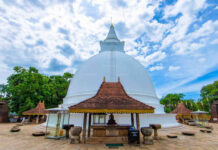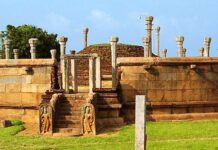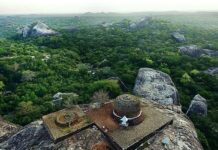

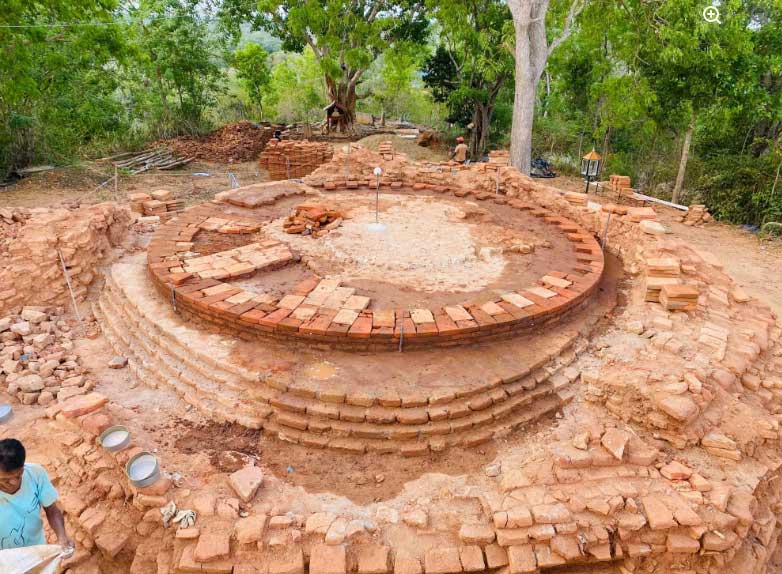
Vadunnagala Pabbatha Viharaya is one of the lesser-known archaeological sites in northern Sri Lanka. Hidden among the forested landscape near Nedunkeni in Vavuniya District, the site is very different from the polished heritage attractions of Anuradhapura, Polonnaruwa or Sigiriya.
There are no grand visitor facilities, souvenir stalls or clearly marked tourist circuits here. Instead, the attraction is the landscape itself: an ancient rocky hill, caves, archaeological remains and evidence of religious activity dating back to Sri Lanka’s early historic period.
The place is also known by several names, including Vaddamana Pabbatha Viharaya, Vaddamana Parwatha Viharaya, Vadunagala Pabbatha Viharaya and Vedukkunaari Malai. This variation in names can make the site surprisingly difficult to research or locate online.
For travellers interested in archaeology, Buddhist heritage and lesser-known parts of northern Sri Lanka, however, that difficulty is part of what makes the place interesting.
Important travel note: Vadunnagala is not a conventional tourist attraction. Access and conditions at the site can change, and the location has been the subject of a continuing religious and legal dispute. Travellers should confirm local access conditions before making a special journey.
Quick Overview
| Detail | Information |
|---|---|
| Name | Vadunnagala Pabbatha Viharaya |
| Other names | Vaddamana Pabbatha Viharaya, Vaddamana Parwatha Viharaya, Vedukkunaari Malai |
| Location | Near Nedunkeni, Vavuniya District, Northern Province |
| Setting | Forested archaeological landscape |
| Historical period | Early historic / Anuradhapura period |
| Main features | Rock caves, drip ledges, archaeological remains and early inscriptions |
| Known inscriptions | Early Brahmi inscriptions associated with cave donations |
| Experience type | Archaeology, heritage and quiet exploration |
| Tourist facilities | Very limited |
| Entry fee | No reliable current official visitor fee located; verify locally |
| Opening hours | No reliable current official tourist timetable located |
| Best suited for | History enthusiasts, archaeologists, photographers and experienced travellers |
| Recommended visit | Only after confirming current access and local conditions |
Where Is Vadunnagala Pabbatha Viharaya?
Vadunnagala Pabbatha Viharaya is associated with the Nedunkeni area of Vavuniya District in northern Sri Lanka.
More specifically, archaeological descriptions place the site in the Paalamotai–Nainamadu forest area around Olumadu, away from Sri Lanka’s main tourist routes.
That location is important to understanding the experience.
This is not a monument sitting beside a major highway with a large parking area and information centre. The archaeological remains are situated in a forested environment, and the surrounding landscape is considerably quieter than the better-known cultural sites in the Cultural Triangle.
For someone travelling through northern Sri Lanka, the site therefore represents a very different type of heritage experience.
You are not simply arriving at a monument and walking around it. You are entering a landscape in which the natural rock formation, caves and surrounding vegetation are part of the archaeological story.
Why Is Vadunnagala Pabbatha Viharaya Important?
The importance of Vadunnagala comes largely from its early archaeological evidence.
The site is associated with an ancient monastic settlement, with caves and rock features that indicate religious activity during Sri Lanka’s early historic period.
Descriptions of the archaeological site identify approximately a dozen caves with cut drip ledges. These channels, carved along the upper edge of caves, were designed to divert rainwater away from the cave interiors.
This is a feature frequently encountered at early Sri Lankan cave monasteries.
For a traveller, the drip ledges are easy to overlook.
They may look like simple grooves cut into the rock. But they are actually evidence of deliberate adaptation of natural caves for long-term human use.
The site therefore tells a much more interesting story than simply “there are some old caves here.”
The rock itself became part of the architecture.
The Early Brahmi Inscriptions
Perhaps the most significant archaeological feature associated with Vadunnagala is the presence of Early Brahmi inscriptions.
Sources describing the site record three early inscriptions associated with caves north of the main hill area. They are generally dated to the period between approximately the 3rd century BCE and 1st century CE.
Their importance comes from what they tell us about the organisation of early monastic communities.
The inscriptions record the donation of caves to the Sangha, the Buddhist monastic community.
For travellers who have already visited Anuradhapura, this provides useful context.
Sri Lanka’s ancient Buddhist landscape was not made up only of enormous stupas and monumental temples. Long before the great monuments that dominate modern tourist itineraries, monks lived in much smaller forest monasteries.
Natural caves could be modified for habitation. Rainwater could be diverted using drip ledges. Donors could dedicate caves to monks. And inscriptions could record those donations in stone.
Vadunnagala helps visitors see this quieter side of early Sri Lankan religious history.
What Does “Pabbatha” Mean?
The word Pabbatha is derived from a Pali term associated with a mountain or rocky elevation.
That makes sense when you see the physical character of the site.
Vadunnagala is centred around a rocky hill rather than a large urban temple complex.
The relationship between the rock and the monastery is particularly interesting because early Buddhist monks in Sri Lanka often established forest monasteries in naturally secluded locations.
Instead of constructing an enormous building first, they could adapt an existing landscape.
A cave could become a dwelling. A rock shelter could become a meditation space. A small flat area could accommodate a religious structure. The surrounding forest provided the isolation associated with monastic life.
A Different Side of Sri Lanka’s Ancient Buddhist Heritage
Most international visitors who want to explore Buddhist heritage in Sri Lanka begin with places such as:
- Anuradhapura
- Mihintale
- Polonnaruwa
- Dambulla
- Kandy
Those places are important, but they can give visitors the impression that ancient Sri Lankan Buddhism was mainly about enormous monuments.
Vadunnagala provides another perspective.
Here, the evidence is much more closely connected with the landscape and small-scale monastic life.
That makes the site particularly useful for travellers who have already visited the major cultural attractions and want to understand how religious communities functioned outside the great royal centres.
What Can You See at Vadunnagala?
Do not arrive expecting a restored temple complex.
The experience is mainly archaeological.
1. Natural Rock Formations
The rocky hill is the first thing that gives the site its character.
Unlike a conventional temple where the building immediately defines the experience, here the natural rock is central.
Walk slowly and look at the relationship between the rock surfaces, caves and surrounding vegetation.
2. Ancient Caves
The site is associated with several natural caves that were adapted for monastic use.
Some have drip ledges above their entrances.
If you have never visited an early Sri Lankan cave monastery before, take a moment to understand why these small details matter.
The caves are not simply holes in the rock. Their modification demonstrates planning and repeated use.
3. Early Brahmi Inscriptions
The inscriptions are among the most important archaeological evidence connected with the site.
Early Brahmi inscriptions are especially valuable because they provide direct historical evidence from a period when written records were still relatively limited.
The inscriptions associated with the caves are understood to record donations to Buddhist monks.
Visitor etiquette: Do not touch, chalk, wet, rub or otherwise attempt to highlight an ancient inscription. Photograph inscriptions from an appropriate distance and follow archaeological guidance.
4. Remains of the Monastic Complex
The archaeological landscape extends beyond the caves.
Descriptions of the site refer to foundations and remnants associated with an ancient monastic settlement.
Much of this is likely to be subtle.
A modern visitor may see a few stones, low foundations or altered ground and wonder what they represent.
This is exactly where a knowledgeable guide or archaeological reference can make a major difference.
Without context, archaeological ruins can look like random stones. With context, the same stones can reveal the outline of an ancient settlement.
Vadunnagala Is Not Another Gal Vihara
It is worth making this distinction because visitors travelling around Sri Lanka’s ancient cities sometimes expect every Buddhist archaeological site to resemble Gal Vihara.
They are very different experiences.
Gal Vihara in Polonnaruwa contains monumental Buddha images carved from granite and is one of the most recognisable monuments of the Polonnaruwa period.
Vadunnagala is much more understated.
Its value is found in:
- Early monastic archaeology
- Natural caves
- Inscriptions
- The forest setting
- Evidence of early religious communities
- The relationship between natural landscape and human settlement
So, if your idea of a worthwhile archaeological site is a huge statue or beautifully preserved building, Vadunnagala may not immediately impress you.
If you enjoy understanding how people lived and worshipped centuries ago, it becomes much more interesting.
The Modern History of Vadunnagala
This is where the story becomes considerably more complicated.
The site has become associated with a modern dispute over religious identity, heritage and access.
The Department of Archaeology has treated the location as an archaeological site associated with an ancient Buddhist monastic complex. At the same time, the hill is also known as Vedukkunaari Malai, and members of the local Tamil community have identified the location with the Vedukkunaari Aathi Lingeswarar Temple.
The competing claims have contributed to legal and social tensions surrounding the site.
This is important information for travellers because the site should not be presented simply as an uncomplicated “hidden Buddhist temple.”
There are competing contemporary narratives surrounding the location.
A responsible travel article should acknowledge that.
For travellers: You do not need to take a position on the modern dispute to visit or understand the archaeological importance of the location. Respect local communities, religious practices and official restrictions.
Why You May See Different Names Online
Searching for this place can be confusing.
You may encounter:
- Vadunnagala
- Vadunagala
- Vaddunagala
- Vaddamana
- Vaddamana Pabbatha Viharaya
- Vaddamana Parwatha Viharaya
- Vedukkunaari
- Vedukkunari Malai
- Vedukkunaari Malai
Different sources use different transliterations and historical or contemporary names.
This is partly a result of translating names between Sinhala, Tamil, Pali and English.
It also reflects the site’s modern religious and archaeological context.
For travellers using digital maps or asking locals for directions, it is therefore useful to have more than one name available.
Is Vadunnagala Pabbatha Viharaya Open to Tourists?
This is one of the most important questions, and the answer requires caution.
Unlike the major archaeological attractions of Anuradhapura and Polonnaruwa, Vadunnagala does not appear to have a consistently published tourist timetable, ticket structure or visitor-management system.
Sources also describe restrictions and disputes concerning access to the site.
Therefore, do not assume that you can simply arrive and walk into the site whenever you want.
Before travelling there:
- Confirm the current access situation locally.
- Ask the relevant local authorities or archaeological officials if access is permitted.
- If a guide is required, arrange one in advance.
- Do not cross barriers or enter restricted areas.
- Respect religious activities taking place at or around the site.
- Be prepared to change your itinerary if access is restricted.
This is particularly important because information published online can become outdated.
Best Time to Visit
If access is confirmed, the practical considerations are similar to other forested archaeological sites in northern Sri Lanka.
Early Morning
Early morning is generally the most comfortable time for exploring exposed or forested archaeological sites.
Temperatures are lower, the light is softer and you have more time before the heat becomes uncomfortable.
Late Afternoon
Late afternoon can also be pleasant, although you should allow enough time to leave the forest area before darkness.
Avoid the Hottest Part of the Day
The northern dry-zone environment can become extremely hot.
A visit that sounds easy on a map can feel very different when walking over uneven ground under tropical heat.
What Should You Take?
Do not treat Vadunnagala like a normal city sightseeing stop.
Pack for a short outdoor exploration.
- Drinking water
- Closed walking shoes
- Lightweight clothing
- Sun protection
- Hat
- Insect repellent
- Mobile phone with offline maps
- Small first-aid kit
- Power bank
- Camera or phone
- Snacks if you are spending several hours away from town
Most importantly, carry enough water.
Do not expect a shop, café or restaurant beside the archaeological site.
What Shoes Should You Wear?
Good footwear matters here more than at many conventional temples.
The terrain can include:
- Rocks
- Uneven ground
- Forest paths
- Loose soil
- Roots
- Natural slopes
Flip-flops may be fine for a short visit to a roadside shrine, but they are not the footwear I would choose for exploring a forest archaeological site.
A pair of lightweight walking shoes with reasonable grip is much more practical.
Photography Tips
Vadunnagala is better suited to documentary photography than postcard-style photography.
Look beyond the obvious.
Photograph:
- The relationship between the caves and the rock
- Drip ledges
- Forest vegetation around the archaeological remains
- Details of stonework
- The wider landscape
- Archaeological foundations
- Natural textures in the rock
Use a wide-angle lens for the relationship between the hill and surrounding forest.
For inscriptions, use a telephoto lens or phone zoom rather than physically approaching or touching the surface.
And remember that this is a religiously sensitive location. Ask before photographing people engaged in worship.
Respecting the Site
Ancient archaeological sites are not photo props.
At Vadunnagala, this matters even more because of the site’s fragile archaeological context.
Never:
- Carve your name into rocks
- Scratch inscriptions
- Remove bricks or stones
- Take archaeological objects as souvenirs
- Climb fragile structures
- Move stones
- Paint or mark surfaces
- Touch ancient inscriptions unnecessarily
- Leave plastic or food waste
- Make loud noises around religious areas
If you see an interesting stone or brick lying on the ground, leave it where it is.
It may look insignificant to you, but its exact position can be archaeologically important.
Is Vadunnagala Suitable for Families?
It depends on the family.
For families with older children interested in archaeology, history or outdoor exploration, the site could be educational.
For families looking for an easy cultural attraction with toilets, cafés, paved paths, clear signs and established parking, this is not the kind of destination to plan around.
The same applies to travellers with limited mobility.
The natural terrain and uncertain visitor infrastructure make it less straightforward than the major heritage attractions.
Is It Suitable for Solo Travellers?
Solo travellers should take extra care.
Because this is a remote archaeological location rather than a busy tourist attraction, do not assume there will always be other visitors nearby.
Before going:
- Tell someone your route.
- Confirm access.
- Carry sufficient water.
- Keep your phone charged.
- Download an offline map.
- Avoid entering unfamiliar forest tracks alone.
- Leave before dark.
- Follow local instructions.
If you are unfamiliar with northern Sri Lanka, arranging local transport and a knowledgeable guide can make the visit much easier.
How Much Time Should You Allow?
If access is available, you do not need an entire day simply to see the archaeological remains.
A reasonable plan would be to allow around 1–2 hours at the site, depending on access, walking conditions and how deeply you want to examine the archaeology.
The bigger issue is the journey.
Vadunnagala should be considered as part of a northern Sri Lanka itinerary, rather than a destination worth travelling a long distance to see in isolation.
Places to Combine With Your Trip
Vavuniya
Vavuniya is a practical base for exploring parts of the surrounding district.
It is also useful for arranging food, fuel, accommodation and transport before heading into more remote areas.
Nedunkeni
Nedunkeni is particularly relevant because Vadunnagala/Vedukkunaari is associated with this wider area.
If travelling independently, use the town as a practical reference point when asking for local directions.
Northern Sri Lanka’s Archaeological Sites
The wider northern region contains numerous lesser-known archaeological locations.
This makes Vadunnagala more meaningful when viewed as part of a broader archaeological landscape rather than as a single isolated monument.
Vadunnagala vs. Anuradhapura
| Vadunnagala | Anuradhapura |
|---|---|
| Remote and quiet | Major heritage destination |
| Forest setting | Large archaeological city |
| Early cave-monastery evidence | Massive stupas and monastic complexes |
| Limited visitor infrastructure | Established tourism infrastructure |
| More exploratory | Easier for first-time visitors |
| Archaeological details are subtle | Monumental architecture dominates |
Vadunnagala vs. Polonnaruwa
Polonnaruwa is much easier for conventional tourism.
The ancient city has a clearly established archaeological circuit, major monuments and visitor facilities.
Vadunnagala is more of an archaeological exploration experience.
The comparison is therefore not really about which is “better.”
They answer different questions.
Polonnaruwa shows what happened when a medieval capital had enormous royal and monastic resources.
Vadunnagala provides clues about an earlier period when religious communities adapted natural landscapes for monastic life.
The Most Interesting Thing to Notice
For me, the most interesting part of Vadunnagala is not a single monument.
It is the idea that a natural landscape could become a monastery.
Look at the caves.
Then look at the drip ledges.
Then consider the inscriptions recording donations.
Suddenly the hill stops looking like an isolated piece of forest.
You can begin to understand it as a place where people lived, practised religion, donated property and created a community many centuries ago.
That is the kind of archaeological experience that does not require a giant monument.
Common Mistakes Travellers Should Avoid
1. Searching Using Only One Spelling
Try several versions of the name when researching directions.
2. Assuming It Is a Normal Tourist Attraction
It is not comparable to Sigiriya or Polonnaruwa in terms of facilities.
3. Going Without Checking Access
Conditions can change, especially because of the site’s sensitive status.
4. Treating Every Stone as a Souvenir
Never remove archaeological material.
5. Visiting in Unsuitable Footwear
The natural terrain requires more care than a conventional temple courtyard.
6. Expecting Restaurants Nearby
Eat beforehand and carry sufficient water before entering remote areas.
7. Treating the Site’s Modern Dispute as Ancient History
The archaeological evidence and the modern religious dispute are two different subjects. Keep them separate when discussing the site.
8. Relying Entirely on Social-Media Directions
A social-media post can be several years old. Confirm the current situation locally.
Frequently Asked Questions
Where is Vadunnagala Pabbatha Viharaya?
Vadunnagala Pabbatha Viharaya is associated with the Nedunkeni/Olumadu area of Vavuniya District in northern Sri Lanka. It is located within a forested landscape around the Paalamotai–Nainamadu area.
Is Vadunnagala Pabbatha Viharaya an ancient site?
Yes. Archaeological descriptions associate the site with an ancient monastic settlement dating to Sri Lanka’s early historic period.
How old is Vadunnagala?
The wider archaeological evidence, including Early Brahmi inscriptions associated with caves at the site, is generally dated to approximately the 3rd century BCE to 1st century CE.
What can visitors see there?
The principal features are the rocky hill, ancient caves, drip ledges, archaeological remains and early inscriptions.
Is Vadunnagala the same as Vedukkunaari Malai?
The names are used for the same general archaeological/religious location in Vavuniya in many sources, although the different names also reflect the site’s modern religious and cultural dispute.
Is there an entrance fee?
There is no reliably published current official tourist fee that can be confirmed. Because access arrangements are not comparable to the major archaeological sites, check locally before travelling.
Can foreigners visit Vadunnagala?
Do not assume unrestricted access. Foreign travellers should confirm the current access arrangements with relevant local authorities or archaeological officials before travelling.
Can I visit without a guide?
Possibly, if access is permitted, but a local guide or knowledgeable contact is useful because the archaeological remains are subtle and the location is remote.
Is Vadunnagala suitable for children?
Older children interested in history and nature may enjoy it. Families should be prepared for uneven terrain and limited facilities.
What is the best time to visit?
If access is permitted, early morning is generally more comfortable than the hottest part of the day. Avoid leaving a remote forest area after dark.
Final Thoughts
Vadunnagala Pabbatha Viharaya is not a destination to visit because it has the biggest statue, the largest stupa or the most impressive restored architecture.
Its appeal is quieter.
It is a place where rock, forest, inscriptions and archaeological remains come together to reveal an early chapter of Sri Lanka’s religious history.
For a traveller who only has a few days in Sri Lanka, the major heritage sites will naturally be easier to include in an itinerary. But for someone travelling through northern Sri Lanka with an interest in archaeology, Vadunnagala offers something different: a chance to look beyond the famous monuments and consider how small monastic communities used the landscape itself.
The modern history of the site also means that visitors should approach it with care. There are competing religious and cultural claims surrounding the location, and legal proceedings have been associated with the dispute. Those issues should not be simplified into a tourist attraction or treated casually.
The best approach is simple: research before you go, confirm access, respect everyone at the site, and leave the archaeology exactly as you found it.
That is how a visit to a lesser-known heritage site can become meaningful rather than simply another photograph on a travel itinerary.
Practical Travel Checklist
Before leaving:
- ☐ Confirm current access
- ☐ Check local road conditions
- ☐ Arrange reliable transport
- ☐ Download offline maps
- ☐ Carry sufficient drinking water
- ☐ Wear proper walking shoes
- ☐ Charge your phone
- ☐ Carry insect repellent
- ☐ Check the weather
At the site:
- ☐ Follow local and archaeological instructions
- ☐ Do not touch inscriptions
- ☐ Do not remove stones or bricks
- ☐ Do not climb fragile remains
- ☐ Respect religious activity
- ☐ Avoid loud behaviour
- ☐ Take rubbish back with you
- ☐ Leave before darkness