

The Underwater Museum at Trincomalee‘s Sandy Bay Beach is a submerged installation that combines art, marine structures, and controlled marine tourism. Opened in 2020 by the Sri Lankan Navy, this unique underwater gallery offers a surreal experience for divers and snorkelers. It offers a different perspective on Trincomalee’s marine environment, particularly for visitors interested in underwater exploration and conservation-led tourism.
The museum is located approximately 800 meters offshore, at a depth of around 60 feet. It is 160 meters long and 85 meters wide.
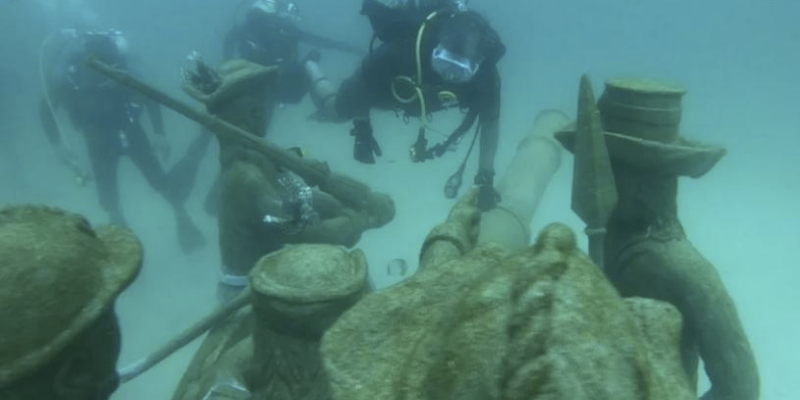
Items displayed in the Underwater Museum Trincomalee
Decommissioned naval equipment, historic maritime remains, and wartime-themed statues form part of the underwater displays.
Vessels belonging to the Sri Lanka Navy, and damaged while in action, are also on display in the water. Some vessels date back to the 1960s and 1970s and were originally manufactured abroad before later serving the Sri Lanka Navy.
The Story Behind the Underwater Museum Trincomalee
The Underwater Museum at Sandy Bay Beach is a groundbreaking eco-tourism project that promotes marine conservation while offering visitors an unforgettable experience. This innovative museum features a series of sculptures and installations submerged in the crystal-clear waters of the Bay of Bengal. The exhibits are designed to function as artificial reef structures while also serving a visual and educational purpose.
Trincomalee, located on Sri Lanka’s northeastern coast, is known for its stunning beaches, rich history, and vibrant marine biodiversity. The Underwater Museum adds a new dimension to the area’s appeal, combining art, nature, and sustainability in a truly unique way.
Why Visit the Underwater Museum Trincomalee?
- A One-of-a-Kind Experience
Opportunities to explore curated underwater installations are still relatively rare in Sri Lanka. The Underwater Museum presents a unique opportunity to observe art and nature coexisting in harmony. Whether you’re snorkeling or diving, the experience is nothing short of magical.
- Marine Conservation Efforts
The museum plays a vital role in protecting and rejuvenating Trincomalee’s marine ecosystem. The sculptures are crafted from eco-friendly materials that promote coral growth, attracting fish and other aquatic creatures. By visiting, you’re supporting sustainable tourism and environmental preservation.
- Perfect for All Skill Levels
Whether you’re a seasoned diver or a first-time snorkeler, the Underwater Museum caters to all levels of experience. The calm, clear waters of Sandy Bay Beach make it an ideal spot for beginners, while the intricate details of the sculptures will captivate even the most experienced underwater explorers.
- Stunning Marine Biodiversity
Trincomalee is home to some of Sri Lanka’s most diverse marine life, including reef-associated fish species and other marine life commonly found along Trincomalee’s eastern coastline. The museum’s location in Sandy Bay Beach ensures you’ll encounter a vibrant underwater world teeming with life.
What to Expect at the Underwater Museum Trincomalee
The museum’s exhibits are a blend of art and environmental consciousness. Some of the highlights include:
- Sculptures Inspired by Sri Lankan Culture: The installations reflect the island’s rich heritage, with designs inspired by traditional art, mythology, and history.
- Artificial Reef Structures: These structures not only serve as artistic displays but also provide a foundation for coral growth, helping to rebuild the marine ecosystem.
- Interactive Displays: Some sculptures are designed to be explored up close, allowing visitors to swim through and around them for a fully immersive experience.
Best Time to Visit
The optimal time to visit the Underwater Museum is between April and September, when the eastern coast enjoys calm seas and excellent visibility. The water remains warm year-round, making it perfect for extended underwater exploration.
How to get to the Museum Sandy Bay Beach
Trincomalee is approximately 270 km from Colombo, Sri Lanka’s capital. You can reach Trincomalee by car, bus, or train.
Once in Trincomalee, Sandy Bay Beach is a short drive away. Many local tour operators offer guided trips to the museum, including equipment rental and transportation.
What Most Visitors Don’t Realize Before Entering the Water
Many first-time visitors imagine the Underwater Museum as a single dramatic “wow” moment. In reality, the experience unfolds slowly. Visibility changes minute by minute depending on tide and sunlight angle – early morning often reveals sharper outlines of the sculptures, while midday brings more fish activity but slightly washed-out contours.
Local guides quietly time entry points based on current direction, not the clock. If you notice boats waiting offshore, it’s usually because guides are reading the sea before letting anyone enter – a detail that isn’t explained to tourists but makes a noticeable difference underwater.
Why this matters for travelers:
If you rush the experience or insist on fixed timings, you may miss the museum at its best.
The Museum as Seen by Local Fishermen
For decades, Sandy Bay was known among local fishermen as a calm holding area – not a fishing hotspot, but a reliable resting zone between deeper runs. Since the underwater structures were placed here, fishermen report an increase in small baitfish around the area, especially during calmer months.
Interestingly, most locals don’t snorkel the museum themselves. They judge its success by what returns to the nets nearby, not by photos. This quiet approval is one of the strongest indicators that the site is doing what it was intended to do – support life, not displace it.
Why the Depth Matters More Than the Sculptures
At roughly 18 meters (60 feet), the museum sits at a depth that balances three things:
- Reduced wave damage during monsoon transitions
- Enough sunlight for algae and coral colonization
- Limited casual anchoring, which protects the site
This depth choice is intentional. Shallower installations elsewhere often suffer from breakage, coral abrasion, or uncontrolled access. Deeper sites lose biodiversity. Trincomalee’s underwater museum avoids both extremes — a detail rarely explained in tourist content.
Who Should Not Visit the Underwater Museum
This experience is not ideal if you:
- Expect brightly colored statues like theme-park attractions
- Are uncomfortable floating in open water, even with guides
- Want guaranteed clear visibility regardless of weather
- Prefer short, high-adrenaline activities over slow exploration
For travelers who enjoy patience, subtlety, and observing how nature adapts over time — this place makes sense. For others, nearby reef snorkeling may be more rewarding.
Snorkeling vs Diving Here: A Real Comparison
Snorkeling
- Best for casual travelers and families
- Sculptures appear more abstract from above
- Fish movement is easier to observe near the surface
- Less time pressure
Diving
- Allows you to understand scale and spacing of installations
- Better appreciation of corrosion, textures, and marine growth
- Requires stable conditions — not ideal on windy days
Many experienced divers quietly say the site is more meditative than dramatic. That’s not a flaw — it’s the point.
Small Details That Change the Experience
- Dark fins and wetsuits attract less attention from curious fish than bright colors
- Exhale slowly near statues – bubbles can disturb fish that settle around structures
- Avoid midday glare if photography matters to you
- Ask guides which sections are “newer” – marine growth differs noticeably
Entry Requirements
- Snorkeling and diving gear can be rented on-site or through tour operators.
- No prior diving experience is required for guided snorkeling visits, but basic swimming skills are recommended. Scuba diving requires appropriate certification.
- Always follow the guidelines provided by your guide to ensure a safe and enjoyable experience.
Tips for Visiting the Underwater Museum Trincomalee
- Book a Guided Tour: Local guides are knowledgeable about the museum’s history, marine life, and conservation efforts. They can enhance your experience with fascinating insights.
- Respect the Environment: Avoid touching the sculptures or coral reefs, as this can damage the delicate ecosystem.
- Bring a Waterproof Camera: Visibility and marine growth can make for interesting photographic conditions.
- Stay Hydrated and Protected: Trincomalee can get quite hot, so remember to drink plenty of water and wear sunscreen.
Exploring Trincomalee Beyond the Museum, Sandy Bay Beach
While the Underwater Museum is a highlight, Trincomalee has much more to offer. Here are a few nearby attractions to add to your itinerary:
- Pigeon Island National Park: A paradise for snorkelers and divers, this marine park is home to vibrant coral reefs and exotic fish.
- Nilaveli Beach: Known for its powdery white sand and turquoise waters, Nilaveli is perfect for relaxation and water sports.
- Fort Frederick and Koneswaram Temple: Explore Trincomalee’s rich history and cultural heritage at these iconic landmarks.
FAQ – Underwater Museum Trincomalee
1. Is the Underwater Museum in Trincomalee suitable for non-swimmers?
The museum itself is located offshore and accessed through guided snorkeling or diving trips. Non-swimmers generally cannot enter the water safely, even with life jackets, so this experience is best suited to visitors who are comfortable floating and following guide instructions.
2. Do you need scuba diving certification to visit the Underwater Museum Trincomalee?
No certification is required for snorkeling visits. However, certified divers are required if you plan to explore the museum using scuba equipment. Most first-time visitors experience the site through guided snorkeling tours.
3. How deep is the Underwater Museum at Sandy Bay Beach?
The installations are placed at a depth of approximately 18 meters (around 60 feet). Snorkelers observe the structures from above, while divers can explore them more closely depending on visibility and sea conditions.
4. Is the Underwater Museum Trincomalee good for snorkeling compared to Pigeon Island?
The underwater museum offers a structured, man-made environment with marine growth developing over time, while Pigeon Island is a natural coral reef with higher fish density and coral diversity. Visitors interested in natural reefs usually prefer Pigeon Island, while those curious about artificial reef concepts may enjoy the museum.
5. What can you actually see underwater at the Trincomalee museum?
Visitors typically see submerged naval structures, statues, and ship components with varying levels of marine growth. Fish activity depends on the season and water conditions, and visibility can change daily.
6. How long does the Underwater Museum visit take?
Most guided trips last between 45 minutes to 1.5 hours, including boat travel, safety briefings, and time in the water. Actual snorkeling or diving time is usually shorter and depends on sea conditions.
7. Is the Underwater Museum harmful to marine life?
The site was designed as an artificial reef project using decommissioned structures. While marine growth is gradually forming, the long-term ecological impact continues to evolve and depends on responsible visitor behavior and ongoing monitoring.
8. Can you touch the statues or structures underwater?
No. Visitors are advised not to touch any structures or marine life. Physical contact can damage early coral growth and disturb marine organisms attached to the surfaces.
9. What is the best time of day to visit the Underwater Museum Trincomalee?
Morning hours generally offer calmer seas and better underwater visibility. Conditions can change quickly, so local guides often adjust timing based on wind and currents rather than fixed schedules.
10. Is the Underwater Museum open all year?
The museum is accessible mainly during the eastern coast season, typically from April to September. During rough sea conditions or off-season months, visits may be limited or suspended for safety reasons.
11. Are there restrooms or facilities near Sandy Bay Beach?
Basic facilities may be available near Sandy Bay, but they are limited. It’s best to prepare in advance and not expect full-scale tourist infrastructure at the site.
12. Is the Underwater Museum worth visiting if visibility is low?
If underwater visibility is poor, the experience may feel underwhelming, especially for photography. On such days, guides may recommend postponing the visit or choosing alternative marine activities in Trincomalee.
Other Places to Visit in Trincomalee
Videos
Location Underwater Museum Trincomalee
Final Thoughts
The Underwater Museum at Sandy Bay Beach represents an experimental approach to marine tourism, combining submerged structures with long-term ecological intent. Whether you’re an avid diver, a nature lover, or simply looking for a unique experience, this underwater wonderland is sure to leave you in awe.
So, pack your swimsuit, grab your snorkel, and get ready to explore one of Sri Lanka’s most innovative and inspiring destinations. For travelers interested in marine environments and non-traditional attractions, the site offers a distinctive underwater experience.
If you’ve visited Underwater Museum at Sandy Bay Beach, feel free to share your experience in the comments below and inspire other travelers to discover this incredible destination.
By Tour My Lanka Editorial Team
– promoting sustainable and authentic travel across Sri Lanka.
Last Updated: December 2025
Images in this article are for illustration purposes and sourced from royalty-free platforms such as Pixabay and Unsplash.