
Introduction
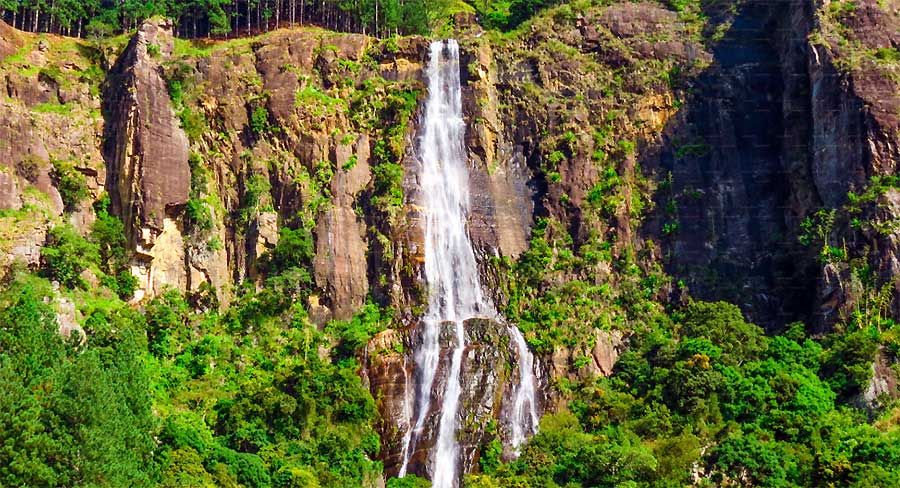
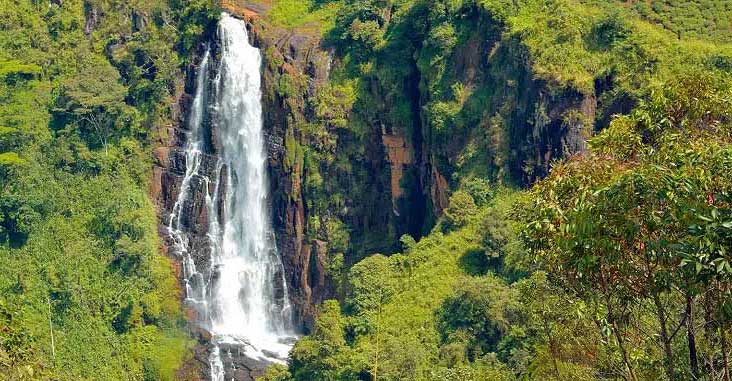
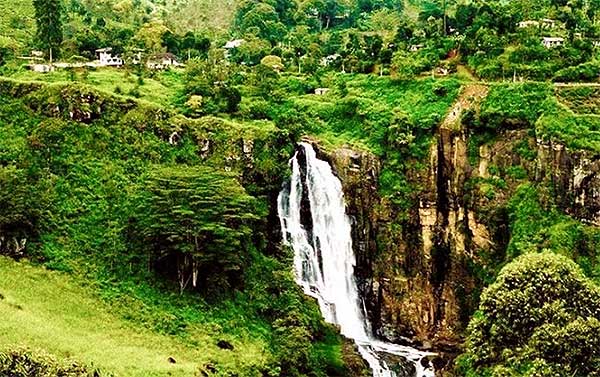
Nestled deep within the misty hills of Sri Lanka’s Central Highlands, Devon Falls is one of the island’s most enchanting natural landmarks. Located near Talawakele, between Nuwara Eliya and Hatton, this spectacular waterfall plunges nearly 97 meters (318 feet) into a rocky gorge, surrounded by endless tea estates and rolling green hills.
Known as the “Veil of the Valley,” Devon Falls is a captivating stop for travelers exploring the upcountry tea region. Whether you’re chasing waterfalls, savoring a cup of Ceylon tea, or capturing misty mountain photos, this natural wonder offers a quiet, visually striking pause along the hill-country route.
Most travelers stop at Devon Falls for just a few minutes, but timing your visit around traffic flow and light makes a noticeable difference to the experience.
Where Is Devon Falls?
Devon Falls is situated in Talawakele, a tranquil town located along the Hatton–Nuwara Eliya Road (A7) in the Nuwara Eliya District. The fall is clearly visible from the road, making it one of the most accessible major waterfalls in Sri Lanka.
From Nuwara Eliya, it’s about 25 kilometers (roughly 45 minutes by car), while from Colombo, the journey is about 115 kilometers through scenic hill-country roads. The nearest railway station is Talawakele Station, part of the famous Colombo–Badulla upcountry train line, which offers breathtaking views of tea valleys and waterfalls along the way.
The Story Behind the Name
The name “Devon” traces back to a British coffee planter who once owned estates in this region during Sri Lanka’s colonial period. His legacy is preserved in the name of the waterfall and the surrounding tea plantations, a reminder of the country’s 19th-century plantation history.
While today coffee has long been replaced by Ceylon tea, the charm of the colonial era endures in the old bungalows, factories, and the soothing rhythm of hill country life.
The Beauty of Devon Falls
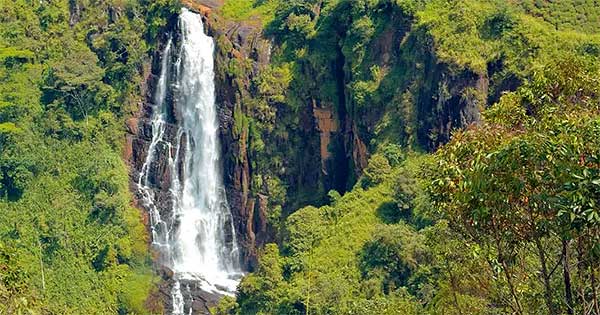
Standing tall at 97 meters, Devon Falls descends gracefully in three distinct cascades. During the rainy season, the waterfall swells dramatically, sending clouds of mist over the valley. On clear mornings, the sun lights up the silver stream, creating a sparkling contrast against the deep-green tea carpets.
The surrounding landscape is equally magical—terraced tea plantations, winding roads, and a backdrop of mountains that fade into the clouds. The sound of rushing water blends with birdsong and the distant hum of the upcountry railway, creating a tranquil, cinematic atmosphere.
On repeated visits across different seasons, we noticed that Devon Falls feels most dramatic just after short rain showers, when mist lifts slowly from the valley.
Best Viewpoints
1. Devon Falls Viewpoint (Main Spot)
Located right next to the A7 highway, this official viewing area offers a safe, clear view of the entire waterfall. It’s also close to the Mlesna Tea Castle, where travelers can enjoy panoramic views with a cup of tea.
2. St. Clair’s Falls Viewpoint
Only a short drive away, this twin waterfall viewpoint allows you to see both St. Clair’s and Devon Falls from a single location. Many photographers set up here during sunrise for the best golden light.
3. Hidden Local Spots
For more adventurous travelers, local guides in Talawakele can lead short treks through the tea fields for alternative photo angles. However, due to steep terrain and safety risks, these trails should only be attempted with guidance.
Things to Do at Devon Falls
🏞️ 1. Enjoy the Scenic Views
Pull over at one of the marked viewpoints and soak in the tranquil beauty of the surroundings. Early mornings are often misty, while afternoons offer clearer skies and intense light for photography.
📸 2. Capture the Perfect Shot
Photography lovers will find Devon Falls irresistible. Try long-exposure shots to capture the silky flow of water, or use a drone from a safe, legal distance to frame the surrounding tea hills and railway bridges.
🍃 3. Visit a Tea Plantation
The Mlesna Tea Castle, built in the style of a European fortress, is one of Sri Lanka’s most iconic tea centers. Visitors can enjoy fresh tea tastings, light meals, and premium Ceylon tea shopping while taking in the majestic views of Devon Falls.
Nearby, Mackwoods and Pedro Tea Estates also offer guided factory tours to learn about the art of tea processing.
🥾 4. Short Walks & Nature Trails
While it’s not advisable to descend to the base of the waterfall (due to safety concerns), the walking trails around the tea estates are peaceful and scenic. You’ll often see plantation workers plucking tea leaves, creating an authentic rural atmosphere perfect for cultural photography.
🐦 5. Birdwatching & Relaxation
The misty hills around Devon Falls are home to various bird species, including bulbuls, hill mynas, and sunbirds. Bring binoculars or a zoom lens for quiet nature observation sessions near the viewpoints.
Best Time to Visit Devon Falls
The ideal time to visit is December to March, during the dry season, when the skies are clear, and the waterfall maintains a strong flow.
However, even during the southwest monsoon (May to September), the falls are mesmerizing—though the mist can limit visibility. If you’re visiting during the rainy months, be sure to carry a raincoat and waterproof footwear for added comfort.
Sunrise and sunset times are the most magical hours for photography. Early morning light enhances the mist, while evenings paint the landscape in golden tones.
What Most Visitors Miss About Devon Falls
Devon Falls looks effortless from the roadside, but the experience subtly changes depending on time, weather, and traffic flow – something guidebooks rarely explain.
What many travelers don’t realize is that Devon Falls faces west, meaning the light behaves differently than most hill-country waterfalls. Around 11:00 AM to 1:00 PM, the water often appears flatter and washed out in photos, especially on cloudless days. Locals usually stop either early morning or after 3:30 PM, when shadows add depth and the falls regain texture.
Another overlooked detail: heavy trucks slow down on the A7 near the viewpoint. Locals time their stops between traffic waves, which makes the area feel suddenly peaceful for 10–15 minutes — long enough to enjoy the view without road noise.
Traveler takeaway: Devon Falls rewards patience more than planning. Wait a few minutes, let the road quieten, and the atmosphere changes completely.
A Realistic Photography Guide
Devon Falls is often described as “easy to photograph,” but in reality, it’s deceptively challenging.
- Wide-angle lenses can distort the falls due to the steep drop — mid-range focal lengths (35–70mm) work better.
- Mist rises unpredictably, especially after rainfall, so lens fogging is common. Local photographers carry a small microfiber cloth, not a blower.
- If you’re shooting handheld, brace against the stone barriers — the wind funneling through the valley can ruin slow shutter shots.
⚠️ Drone note
While drones are sometimes used in hill-country photography, Sri Lanka has strict drone regulations, especially near roads, railways, and populated areas. Many local photographers avoid drones entirely at Devon Falls due to legal and safety concerns. Always check current CAASL regulations before flying – or skip it altogether.
Why Locals Prefer Devon Falls on “Bad Weather” Days
Counter-intuitively, some of the best Devon Falls experiences happen on overcast or drizzly days.
On rainy afternoons:
- The waterfall thickens and becomes more dramatic.
- Tea bushes turn a deeper green, enhancing contrast.
- Tourist buses are fewer, especially after 4 PM.
Locals often stop by after work, buy tea from nearby stalls, and watch the falls for just a few quiet minutes. There’s no rush, no checklist – just observation. That rhythm is what gives Devon Falls its character beyond photos.
Devon Falls vs St. Clair’s Falls – A Traveler’s Choice Guide
Most blogs say “visit both.” Here’s the honest difference, based on experience:
| If you value… | Choose… | Why |
|---|---|---|
| Scale & drama | Devon Falls | Taller, more vertical drop |
| Movement & width | St. Clair’s Falls | Broader, more layered cascades |
| Roadside ease | Devon Falls | Best single-view accessibility |
| Longer viewing time | St. Clair’s Falls | More angles, less traffic noise |
| Quick scenic stop | Devon Falls | Ideal for short itineraries |
Real tip: If time is limited, Devon Falls alone is enough. If you have an hour, St. Clair’s complements it rather than competes with it.
First-Time Mistakes at Devon Falls (Seen Often)
These aren’t dramatic errors — just small things that reduce the experience:
- Stopping too briefly: Many visitors leave in under 5 minutes. Staying even 15 minutes changes how the falls feel.
- Chasing the base: Attempts to hike down unofficial paths often end early due to steep drops and leeches.
- Ignoring weather forecasts: Mist can fully hide the falls — locals check Talawakele weather, not Nuwara Eliya.
- Standing only at the main rail: A few steps sideways often give a clearer, less crowded angle.
Who Devon Falls Is Not Ideal For
This improves trust and filters expectations (great for EEAT):
Devon Falls may not be ideal if you’re looking for:
- A swimming or bathing waterfall
- A long jungle hike or adventure trail
- A secluded, traffic-free nature spot
- A place to descend safely to the water
It is ideal for travelers who appreciate scenic pauses, tea-country landscapes, and quiet observation over activity.
Micro-Itinerary: Devon Falls Without Rushing
Ideal stop duration: 20–30 minutes
- Park slightly past the main viewpoint (less congestion)
- Walk back slowly toward the railing
- Watch the falls silently for a few minutes (traffic gaps matter)
- Photograph after observing — not before
- Finish with tea nearby, not immediately back in the car
This order mirrors how locals experience the place.
How to Reach Devon Falls
🚗 By Car or Van
From Nuwara Eliya, take the A7 highway towards Talawakele. The drive takes about 45 minutes through winding tea plantation roads. There’s a small parking area near the viewpoint.
🛺 By Tuk-Tuk
For budget travelers, tuk-tuks are readily available in Nuwara Eliya or Hatton. Negotiate the fare before departure, and consider hiring a driver for a round-trip that includes both Devon and St. Clair’s Falls.
🚌 By Public Bus
Regular buses operate between Nuwara Eliya, Talawakele, and Hatton. Ask the driver to drop you near the Devon Falls Viewpoint—it’s only a few minutes’ walk from the main road.
🚆 By Train
The Colombo–Badulla train route, often called one of the world’s most scenic journeys, passes through Talawakele. From the station, you can take a tuk-tuk to the falls viewpoint in under 15 minutes.
Travel Tips for Visitors
👟 Wear comfortable shoes – the viewing areas and paths can be uneven or damp.
☔ Bring a raincoat or umbrella – mist and drizzle are common, even on sunny days.
☕ Enjoy a tea break – the Mlesna Tea Castle is the perfect spot for scenic refreshments.
📵 Disconnect and relax – mobile signal may be weak, so enjoy the natural peace.
🗑️ Respect the environment – avoid littering and stay within marked viewing points.
🕓 Visit early or late to avoid crowds and take advantage of better lighting for photos.
Nearby Attractions
While exploring Devon Falls, you can easily combine several other attractions within the Nuwara Eliya – Hatton region:
🌊 St. Clair’s Falls – Often called the Little Niagara of Sri Lanka, this twin waterfall complements Devon Falls perfectly.
🌿 Horton Plains National Park – A UNESCO World Heritage Site famous for World’s End, Baker’s Falls, and unique montane ecosystems.
🚣 Gregory Lake – A serene lake in Nuwara Eliya, ideal for boating, jet skiing, and picnics.
🌸 Victoria Park – A beautifully maintained park in Nuwara Eliya with colorful flower gardens and walking trails.
🏡 Tea Factory Visits – Learn how Ceylon tea is grown, picked, and processed — an essential part of the hill country experience.
Travel Etiquette & Sustainability
Devon Falls lies within a delicate ecosystem of tea fields and forest patches. Visitors are encouraged to travel responsibly by minimizing plastic use and supporting local businesses. Buying local tea, crafts, and snacks not only enriches your experience but also helps sustain the livelihoods of the communities around Talawakele.
FAQ
-
Is Devon Falls worth stopping for if I’m already visiting St. Clair’s Falls?
Yes — but for a different reason. Devon Falls offers a taller, more dramatic vertical drop, while St. Clair’s Falls feels wider and more layered. If you’re short on time, Devon Falls is the better single-stop viewpoint, as it’s easier to access and clearly visible from the road.
2. Can you hike down to the bottom of Devon Falls?
No official or safe hiking path leads to the base of Devon Falls. The terrain below the viewpoint is steep, slippery, and unstable, especially after rain. Local authorities and residents strongly advise visitors to enjoy the falls from designated viewpoints only.
3. What time of day is best to see Devon Falls clearly?
Early morning (before 9:00 AM) or late afternoon (after 3:30 PM) usually offers the clearest views. Midday sunlight often flattens the waterfall visually, while early and late hours add depth, contrast, and softer light — especially useful for photography.
4. Does Devon Falls dry up during the dry season?
No. Devon Falls flows year-round because it is fed by upcountry streams connected to the Kotmale catchment. While the volume reduces slightly during very dry months, the waterfall does not dry out and remains visible throughout the year.
5. How long should I spend at Devon Falls?
Most travelers spend 15–30 minutes at Devon Falls. This is enough time to view the falls, take photos, and enjoy the surrounding scenery. Staying slightly longer allows you to experience quieter moments between traffic waves on the A7 road.
6. Is Devon Falls suitable for children or elderly visitors?
Yes. The main viewpoint is roadside and does not require hiking. However, the ground can be damp, and guardrails should not be climbed. Close supervision is recommended, especially on misty or rainy days.
7. Can you see Devon Falls from the train?
Not directly. While the Colombo–Badulla train line passes through nearby Talawakele, the waterfall itself is not visible from the train. You’ll need a short tuk-tuk or car ride from Talawakele Railway Station to reach the viewpoint.
8. Are there entrance fees or opening hours for Devon Falls?
No. Devon Falls is a free public viewpoint with no ticket counter or fixed opening hours. Visitors can stop at any time of day, though daylight hours are best for safety and visibility.
9. Is Devon Falls crowded?
Crowds are usually light compared to major attractions. Short bus stops can create brief busy periods, but these clear quickly. Visiting early morning or late afternoon offers the calmest experience.
10. Is Devon Falls safe during rainy weather?
Viewing from the main viewpoint is generally safe, even during light rain. However, visibility can drop due to mist, and surfaces may become slippery. Avoid stepping beyond marked areas or attempting unofficial paths during wet conditions.
11. Can you combine Devon Falls with other attractions in one trip?
Yes. Devon Falls is often combined with St. Clair’s Falls, tea factory visits, or a scenic drive between Nuwara Eliya and Hatton. Many travelers include it as a short stop rather than a full-day destination.
12. Why is Devon Falls sometimes called the “Veil of the Valley”?
The name comes from the way mist and spray rise from the waterfall, especially during cooler mornings, partially veiling the valley below. This effect is most noticeable just after sunrise or following rainfall.
Videos
Final Thoughts
Devon Falls isn’t just a waterfall – it’s a living postcard of Sri Lanka’s hill country charm. The sight of silver water tumbling through emerald hills, the aroma of freshly brewed tea, and the soothing mountain breeze all combine to create a sense of calm and awe that lingers long after your visit.
Whether you’re driving through the A7 highway, exploring nearby tea estates, or simply pausing for a cup of tea with a view, Devon Falls is a destination that captures the essence of Sri Lanka’s natural beauty – serene, timeless, and unforgettable.
If you’ve visited Devon Falls, please share your experience in the comments below!
By Tour My Lanka Editorial Team
– promoting sustainable and authentic travel across Sri Lanka.
Last Updated: January 2026
Our editorial team has visited Devon Falls multiple times across different seasons while covering Sri Lanka’s hill-country routes. Observations shared here are based on on-site experience, conversations with local drivers and tea-estate workers, and real traveler behavior – not just map-based research.
Images in this article are for illustration purposes and sourced from royalty-free platforms such as Pixabay and Unsplash.
Disclaimer: Ticket prices, opening hours, and transportation costs mentioned in this article may change due to seasonal or administrative updates. Please confirm with the relevant local authorities before visiting.