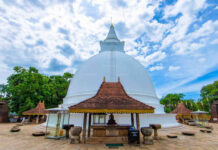

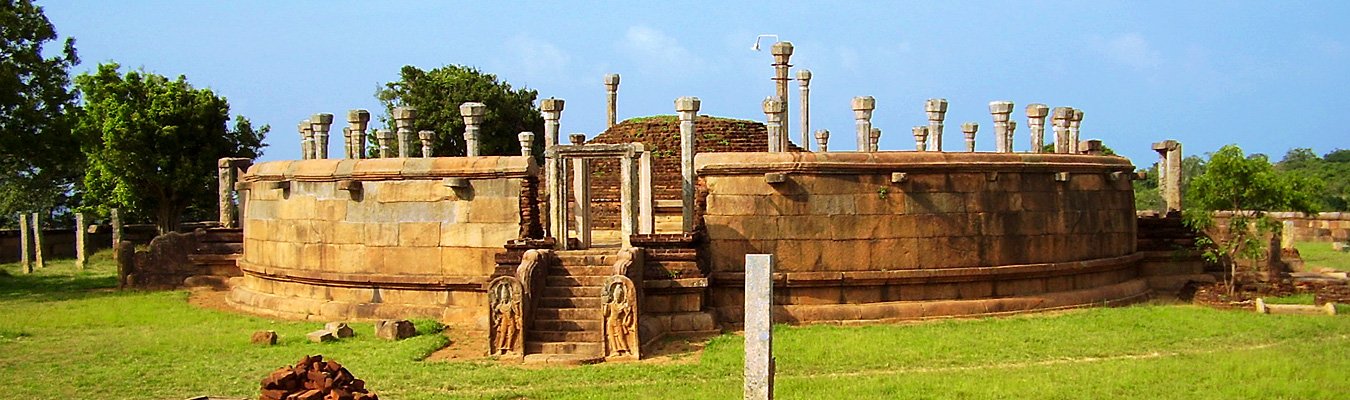
Girihandu Seya is located in Trincomalee. This is the very first Buddhist Stupa to be built in Sri Lanka, maybe in the world. Two seafaring merchants, by the names of Trapusa and Bahalika (commonly known on the island as Tapassu and Bhalluka), built this temple, enshrining the hair relics of Lord Buddha.
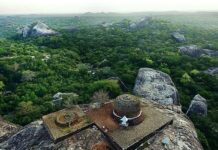
Panoramic views of the picturesque haven surround the sacred place of worship and wonder. As you climb your way up towards the rock, you will come across stone slab inscriptions called the ‘Thiriyaya stone inscriptions’, which dictate the origins of the Stupa.
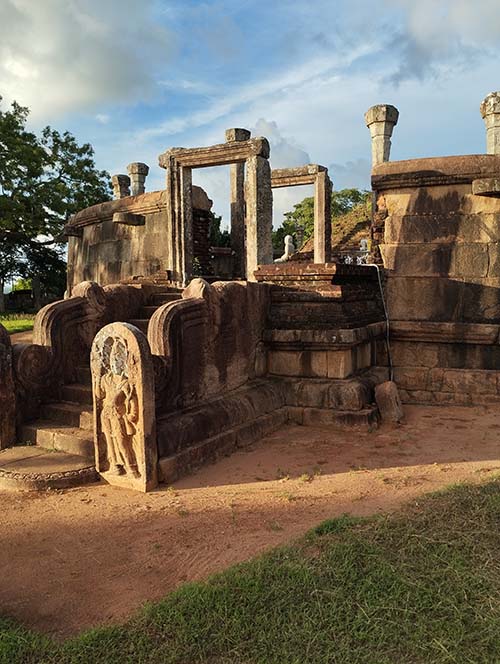
A peaceful and spiritual environment unfolds as you finally see the ‘vatadage’ and the remains of the ‘Buddhu Gey’ (image house) and its stone pillars and bricks with its reclining Buddha Statue.
History of Girihandu Seya
According to the Nidanakatha and Mahavagga, a book on the Vinaya, Load Buddha spent 7 weeks (Sath Sathiya) after his enlightenment (This is around 528 BC), and at the end of that period, the 50th day, two brother merchants called “Thapassu Ballula” offered the first dana (alms-giving). After the Dana, they requested something to worship and received a “Sacred Kesha Datu” (lock of hair relic). Those merchants used to travel to different parts of the region and also came to Sri Lanka.
According to history, the two merchants brought the casket, which contained the hair relics of Lord Buddha, and placed it on the summit of a small rock. The merchants then went to have their meals. After they returned to the spot where the casket lay, they found that they couldn’t move the casket. So with great reverence, they heaped stones upon the casket and went on their way.
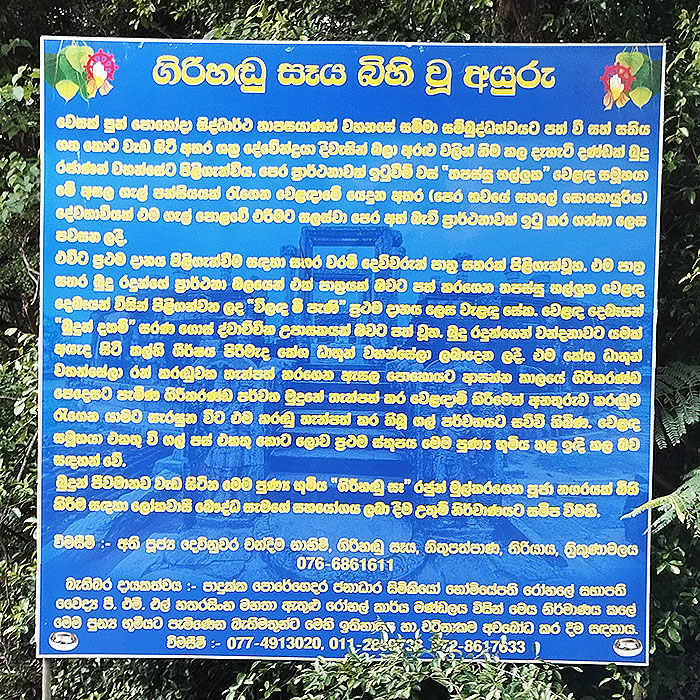
The oldest incident connected with the site is etched in an 8th-century Sanskrit epigraph found at the site, which refers to a shrine named Girikandicaitya being established on the hilltop by a company of merchants headed by Tapassu and Bhallika.
Girihandu Seya Location and Accessibility
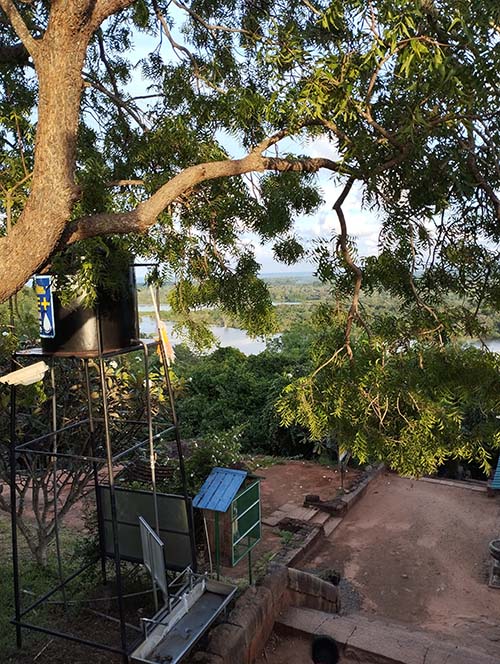
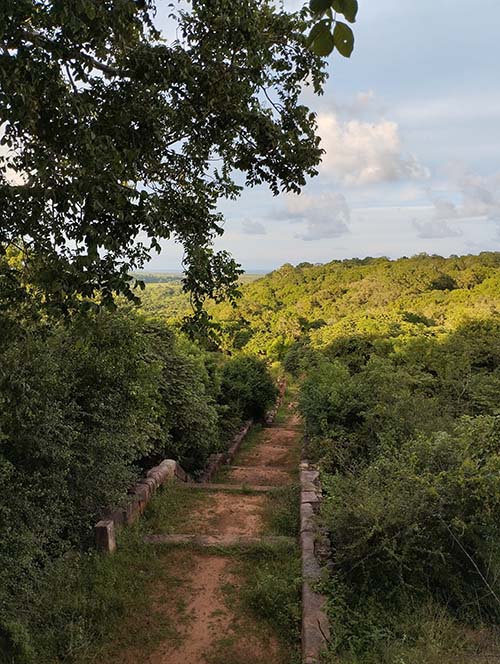
Girihandu Seya is situated near Tiriyaya, a small village about 47 km north of Trincomalee. The Stupa is perched atop a hill, offering breathtaking panoramic views of the surrounding landscapes. Reaching the site involves a moderate trek through lush greenery, making it a rewarding experience for both nature lovers and adventure seekers.
Architecture of the Girihandu Seya
Professor Paranavitana states that the Vatadage at Thiriyaya, while conforming to the general pattern of the Vatadage, had architectural features which have not been noticed at any other shrine of this class.
The capitals of the pillars at Thiriyaya have not been separately carved and joined, as they are at other Vatadage sites. Facing the entrances at the cardinal points are altars of carved granite slabs. At the head of each flight of steps is a stone doorway.
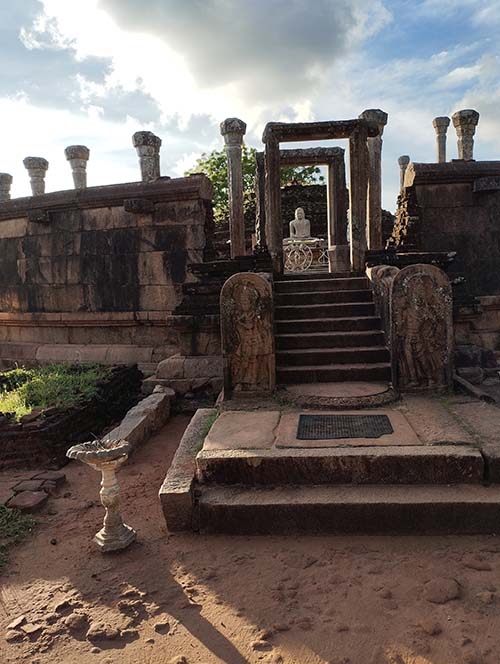
The four entrances at the cardinal points are provided with moonstones, Makara balustrades, and naga guardstones. The moonstones are plain except for a lotus petal carving at the circumference. The guardstones are the most striking artistic feature. The Naga kings are depicted as having an air of austerity, with a simple, unadorned appearance and a benign expression. According to scholars, these qualities, along with their elongated limbs, suggest that the Pallava style of art belongs to a phase earlier than Anuradhapura and Polonnaruwa.
Another unusual feature here is the evidence of a wooden upright railing, which may have covered the space between the top of the stone wall and the roof.
Around the vatadage are seen the remains of image houses, of which the largest housed a large recumbent Buddha image.
Why Visit Girihandu Seya?
- Spiritual Retreat: Girihandu Seya offers a peaceful environment for meditation and spiritual rejuvenation. The site’s connection to the Buddha makes it a sacred destination for Buddhists and spiritual seekers.
- Historical Exploration: History buffs will appreciate the ancient ruins and inscriptions that tell the story of Sri Lanka’s rich Buddhist heritage.
- Scenic Beauty: The Stupa’s hilltop location provides panoramic views of Trincomalee’s coastline, making it a picturesque spot for nature lovers.
- Off-the-Beaten-Path Experience: Unlike more popular tourist destinations in Sri Lanka, Girihandu Seya remains relatively untouched by mass tourism, offering a more authentic and tranquil experience.
How to Get to Girihandu Seya
Girihandu Seya is located in Thiriyaya, a small village approximately 45 kilometers north of Trincomalee.
- From Trincomalee: Hire a tuk-tuk or private vehicle for a scenic drive along the coastal road. The journey takes about 1.5 hours.
- From Colombo: Take a train or bus to Trincomalee, then proceed to Thiriyaya by road.
- By Air: The nearest airport is in Trincomalee, with domestic flights available from Colombo.
Location of the Girihandu Seya
Best Time to Visit
The ideal time to visit Girihandu Seya is during the dry season from April to September, when the weather is pleasant, and the trekking path remains dry and accessible. Early mornings or late afternoons are the best times for a visit, as the temperatures are cooler and the lighting enhances the landscape’s beauty.
Things to Do at Girihandu Seya
- Explore the Ancient Stupa – Witness the oldest Buddhist Stupa in Sri Lanka and learn about its historical significance.
- Enjoy the Scenic Hike – Trek through a picturesque trail filled with diverse flora and fauna.
- Experience Spiritual Tranquility – Meditate in a peaceful ambiance away from the hustle and bustle of city life.
- Capture Breathtaking Views – Enjoy the panoramic scenery from the summit, making it a perfect spot for photography.
Travel Tips
- Wear comfortable shoes suitable for trekking.
- Carry enough water and light snacks for the hike.
- Dress modestly, as this is a sacred Buddhist site.
- Be mindful of wildlife and insects in the area.
- Respect the religious significance of the site by maintaining silence and cleanliness.
Nearby Attractions in Trincomalee
While visiting Girihandu Seya, don’t miss out on exploring other attractions in Trincomalee:
- Koneswaram Temple: A historic Hindu temple perched on Swami Rock, offering stunning ocean views.
- Nilaveli Beach: A pristine beach perfect for swimming, snorkeling, and relaxation.
- Pigeon Island National Park: A marine sanctuary known for its coral reefs and diverse marine life.
- Fort Frederick: A colonial-era fort with historical significance and scenic views.
What Locals Notice That Most Visitors Miss at Girihandu Seya
Most travelers arrive focused on the stupa itself, but locals who visit Girihandu Seya for worship notice details that quietly explain why this site feels different from other ancient temples.
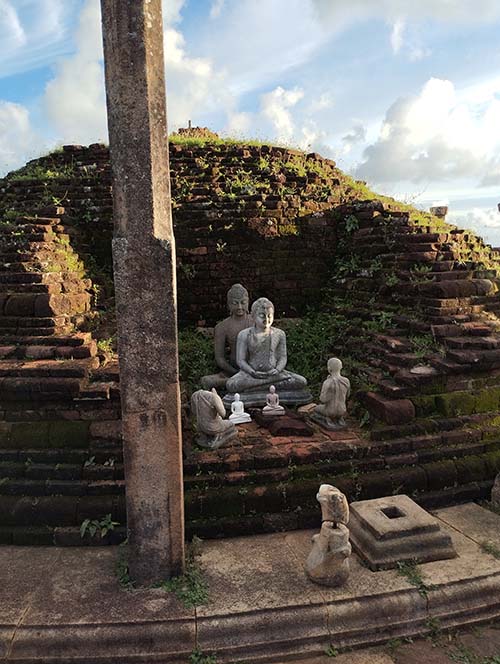
One such detail is the openness of the hilltop. Unlike later Anuradhapura-era stupas that sit within complex monastic boundaries, Girihandu Seya stands with minimal enclosing structures, giving it a raw, elemental feel. Elder monks from the region often describe this as closer to early Buddhist simplicity — a place meant for remembrance rather than grandeur.
Another easily missed detail is the wind pattern near the vatadage. Even on hot days, a steady breeze moves across the summit. Locals believe this is why meditation here feels unusually calming compared to forest monasteries deeper inland. Whether spiritual or environmental, many visitors report a noticeable sense of mental quiet after sitting here for just a few minutes.
Visiting Girihandu Seya as a Non-Buddhist: What’s Appropriate (and Appreciated)
Girihandu Seya is not a “tourist temple” in the conventional sense. It is still actively respected by pilgrims, especially during Poson and Vesak periods.
If you are not Buddhist:
- You are not expected to participate in rituals
- Standing quietly near the vatadage or stupa is completely acceptable
- Locals appreciate visitors who pause before taking photos, rather than walking straight in with cameras
A small but meaningful gesture many travelers adopt is removing footwear slightly earlier than required, before reaching the main sacred area. While not mandatory, it’s often noticed — and appreciated — by elderly devotees.
This respectful approach often leads to spontaneous, warm conversations with local pilgrims, especially on quieter weekdays.
The Hilltop Silence: Why Girihandu Seya Feels Different From Other Ruins
Unlike Polonnaruwa or Anuradhapura, Girihandu Seya is not surrounded by souvenir stalls, loud guides, or constant foot traffic. The silence here is not curated — it’s accidental.
The access road ends before the hill, and the final approach must be walked. This filters visitors naturally, meaning only those genuinely interested make the climb. The result is a place where:
- You may hear only wind, insects, and distant ocean sounds
- Mobile signals are weak or absent
- Time feels slower, especially in the late afternoon
Many local travelers describe Girihandu Seya as a place they visit not to “see something,” but to reset their mind before returning to daily life.
Practical Reality Check: What the Journey Is Actually Like
Most online guides describe the access as a “moderate hike,” but here’s the realistic version:
- The path is uneven and partly rocky, not paved
- During dry months, it’s dusty rather than muddy
- During rainy periods, footing becomes slippery near the summit
- There are no shops, toilets, or shaded rest points once you begin climbing
Local visitors usually:
- Bring water in reusable bottles
- Avoid midday climbs
- Plan visits to be under one hour total at the summit
This is not a place to rush — but it’s also not designed for long stays unless you are meditating.
Best Time of Day (Based on Local Visiting Patterns)
While many articles recommend “early morning,” locals often prefer late afternoon (around 4:30–5:30 PM).
Why?
- Heat is lower
- Wind is stronger at the summit
- The light softens the stone structures without harsh glare
- Pilgrim numbers are minimal compared to mornings on Poya days
Sunset itself is usually observed from the side, not directly from the stupa area, out of respect.
Girihandu Seya in the Context of Trincomalee Travel
For travelers already visiting Nilaveli or Trincomalee town, Girihandu Seya offers something rare: spiritual history without crowds or commercialization.
It pairs especially well with:
- A quiet beach morning in Nilaveli
- A cultural afternoon at Fort Frederick
- A reflective end-of-day visit before returning inland
Rather than treating it as a checklist attraction, experienced travelers see Girihandu Seya as a pause point — a place that adds emotional depth to a Trincomalee itinerary.
Frequently Asked Questions
1. Is Girihandu Seya really the first Buddhist stupa in Sri Lanka?
Girihandu Seya is traditionally regarded as one of the earliest Buddhist stupas associated with Sri Lanka, linked to the hair relics of the Buddha brought by merchants Tapassu and Bhallika. While exact dating is debated among historians, the site holds exceptional importance in early Buddhist tradition.
2. Where exactly is Girihandu Seya located?
Girihandu Seya is located near Tiriyaya village, about 45–47 km north of Trincomalee, on Sri Lanka’s northeastern coast. The stupa sits on a hilltop overlooking forested land and distant coastal views.
3. How difficult is the climb to Girihandu Seya?
The climb to Girihandu Seya is short but uneven, involving a rocky footpath rather than paved steps. Most visitors can complete it without difficulty, but sturdy footwear is recommended, especially after rain.
4. How long does it take to visit Girihandu Seya?
Most visitors spend 45 minutes to 1.5 hours at Girihandu Seya, including the walk up, time at the stupa and vatadage, and the descent. Meditation or quiet reflection may extend the visit.
5. Can non-Buddhists visit Girihandu Seya?
Yes, non-Buddhists are welcome to visit Girihandu Seya. Visitors are expected to dress modestly, remove footwear in sacred areas, and maintain a respectful, quiet presence.
6. Are the Tiriyaya stone inscriptions open to the public?
Yes, the Tiriyaya stone inscriptions can be seen along the approach to the site. They are not fenced off, so visitors are advised to view them carefully without touching or climbing on the stone surfaces.
7. Is photography allowed at Girihandu Seya?
Photography is generally allowed at Girihandu Seya, especially of the landscape and ruins. However, visitors should avoid intrusive photography during religious observances and refrain from posing disrespectfully near sacred structures.
8. Is Girihandu Seya crowded with tourists?
No, Girihandu Seya is rarely crowded, even during peak travel seasons. Most visitors are local pilgrims rather than tour groups, making it one of the quieter historical sites in the Trincomalee region.
9. What is the best time of day to visit Girihandu Seya?
Late afternoon is often preferred, as temperatures are cooler and the hilltop breeze is stronger. Early mornings are also suitable, particularly on non-Poya days.
10. Is Girihandu Seya suitable for children or elderly visitors?
Children can visit with supervision, but elderly visitors should note that the path is uneven and has no handrails. Assistance may be required for those with limited mobility.
11. Are there facilities like toilets or shops near Girihandu Seya?
There are no tourist facilities such as toilets, shops, or cafés at the site itself. Visitors should prepare in advance and carry water if needed.
12. Can Girihandu Seya be visited on a day trip from Trincomalee?
Yes, Girihandu Seya can be visited as a half-day trip from Trincomalee, either by tuk-tuk or private vehicle, often combined with nearby coastal or cultural sites.
13. Why is Girihandu Seya considered spiritually significant?
Girihandu Seya is associated with the first alms offering (Dana) made to the Buddha and the enshrinement of hair relics. This connection gives it deep spiritual importance, particularly for Buddhist pilgrims.
14. Is Girihandu Seya mentioned in ancient inscriptions?
Yes, an 8th-century Sanskrit inscription found at the site refers to a shrine called Girikandicaitya, supporting the site’s long-standing religious and historical significance.
Videos
Other attractions around Trincomalee >>
If you’ve visited Girihandu Seya, feel free to share your experience in the comments below and inspire other travelers to discover this incredible destination.
By Tour My Lanka Editorial Team
– promoting sustainable and authentic travel across Sri Lanka.
Last Updated: December 2025
Images in this article are for illustration purposes and sourced from royalty-free platforms such as Pixabay and Unsplash.