

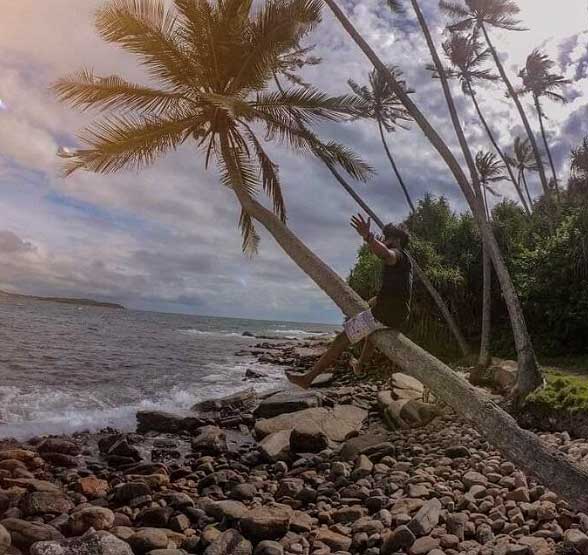
Blue Beach Island is a tiny yet stunning island in the Nilwella area of Matara, located between Dickwella and Tangalle on Sri Lanka’s southern coast. Its name comes from the beautiful turquoise-blue waters surrounding it — a paradise to look at from every angle.
But the coolest part?
This is not just an island — it’s a tied island, connected to the mainland by a natural sand strip known as a tombolo. When the tide rises, the tombolo can sink beneath the waves, making access part of the adventure!
What is a Tombolo?
At Nilwella, the tombolo doesn’t behave the same way every day — its walkability depends not just on tide times, but also on wind direction and wave angle, which local guides check before allowing anyone to cross.
Tip: Always confirm crossing conditions with the on-site guide or fishermen near Nilwella Harbour — they rely on real-time sea behavior, not tide charts alone.

Camping on Blue Beach Island
The island is private property, and access is allowed only with permission. A managed camping experience is offered on the island with:
✔ Shelter + cooking setup
✔ Most equipment included
✔ Beachfront campsite
✔ Stunning sunset & sunrise viewpoints
Group requirements may apply. Please get in touch with the authorized operators and pricing.
Most first-time campers say the most memorable moment isn’t the sunset, but the sound of waves wrapping around both sides of the island after midnight.
Disclaimer: Camping policies and prices are subject to change seasonally. Always verify with the official host before planning.

Sunset & Sunrise Magic
The campsite faces the open ocean — perfect for photography and sky watchers. Climb the rocky platform for:
🌅 A fiery sunset over the Indian Ocean
🌄 A peaceful pastel sunrise the next morning
Bring your camera — these moments are unforgettable!

Snorkeling at Blue Beach Island
Right at the tombolo entrance, the shallow reef offers great snorkeling, complete with tropical fish and vibrant corals. Beginners welcome!
- Professional guides provide:
- Life jackets & mask sets
- Basic training
Safety supervision
➡ Recommended only during calm sea months (Nov–Apr) ✅
➡ Always follow the guide instructions for safety
This is a beginner-friendly reef meant for calm exploration rather than dramatic coral formations, which is why guides limit sessions to safe, shallow zones.
How to Get There
- From Colombo
Travel via Southern Expressway → Exit at Aparekka interchange → Continue toward Nilwella via Weeraketiya Road and Wellawaya Highway.
- From Tangalle
Drive west along the coastal road to Nilwella — signage available near the fishery harbour.
You will pass the Nilwella Fishery Harbour, then reach the tombolo footpath leading to the island.
Location Map
Best Time to Visit
✔ November – April
- Moderate waves and perfect turquoise waters
- Avoid rough seas during the monsoon months
Safety Tips
- Cross the tombolo only when safe — tides rise fast
- Wear covered footwear for rocks and corals
- Keep the island clean — no littering
- Follow all private property rules
- No snorkeling during rough sea conditions
- Supervise children near water at all times
What Most Visitors Don’t Realize Before Visiting Blue Beach Island
On photos, Blue Beach Island looks calm and postcard-perfect. On the ground, it behaves more like a living coastline than a tourist attraction.
The sea here changes character quickly. In the morning, the tombolo may feel like a harmless sandy path. By early afternoon, the same stretch can pull at your ankles with lateral currents. This unpredictability is exactly why local operators insist on guided access.
Locals from Nilwella don’t casually “drop by” the island for a swim the way they might at Dickwella Beach. Even strong swimmers treat the crossing with respect. For travelers, understanding this difference matters more than any checklist.
Local insight: If fishermen are not crossing on foot, you shouldn’t either.
Reading the Sea: A Local Skill That Keeps You Safe
One reason incidents are rare here is because experienced guides rely on visual cues most tourists overlook.
Before any crossing or snorkeling session, local guides watch:
- Wave direction, not just size
- Water color shifts near the reef (dark patches mean depth or coral)
- Foam patterns around the tombolo edges (a sign of side currents)
If a guide asks you to wait—even when the sea “looks fine”—trust that call. The southern coast often appears calm from shore while moving aggressively underneath.
This is also why self-guided visits are discouraged. The danger isn’t dramatic waves; it’s false calm.
The Island’s Quiet Hours: When Blue Beach Feels Most Authentic
Most visitors arrive between 9:30 a.m. and 3:00 p.m.
Outside these hours, the island feels entirely different.
- Early morning (6:00–8:00 a.m.)
The water is glassy, light refracts through the shallows, and seabirds dominate the soundscape. This is when local fishermen pass near the reef, and the island feels untouched. - Late evening (after sunset)
From the campsite, you can hear waves wrapping around both sides of the island—a rare sensation you don’t get on mainland beaches. With minimal light pollution, stars appear sharper than anywhere along this stretch of coast.
These quiet hours are not advertised—but they are what turn a visit into a memory.
Snorkeling Reality Check: What You’ll Actually See (Not Exaggerated)
Unlike marine parks with dense coral gardens, Blue Beach Island offers a transitional reef system.
Expect:
- Small reef fish (sergeant majors, parrotfish, juvenile groupers)
- Coral patches rather than walls
- Excellent water clarity during the dry season
Do not expect:
- Deep coral dives
- Large marine species
- Aquarium-style density
This honesty matters. The experience here is about ease and accessibility, not spectacle. For beginners, that’s exactly why it works.
Camping Here Feels Different Than Mainland Beach Camping
Camping on Blue Beach Island isn’t about luxury—it’s about exposure.
You’re surrounded by water on all sides. Wind direction shifts after midnight. The sound of waves never fades. For many first-timers, sleep comes in fragments—but those fragments are unforgettable.
Experienced campers often say the most powerful moment is just before dawn, when the island is silent and the sea resets its rhythm.
If you’re someone who needs complete stillness to rest, this may not be your ideal overnight stay. But if you want to feel the ocean rather than observe it, few places in Sri Lanka offer this intensity.
Environmental Responsibility: Why This Island Is Still Clean
Blue Beach Island stays relatively unspoiled for one reason: restricted access.
There are no public bins, no food vendors, and no casual entry. Whatever goes in must come out. Local operators enforce this strictly—not because it’s fashionable, but because waste here washes directly onto nearby fishing grounds.
Travelers who respect this rule are welcomed back. Those who don’t are not.
Responsible travel tip: Avoid bringing packaged snacks with plastic wrappers. Locals notice.
Who Will Love Blue Beach Island (And Who Probably Won’t)
This place is ideal for:
- Slow travelers seeking non-commercial experiences
- First-time snorkelers who want guidance
- Couples or small groups who enjoy nature over nightlife
It may disappoint:
- Visitors expecting beach bars or cafés
- Travelers uncomfortable with changing sea conditions
- Those seeking “Instagram-only” stops without effort
Being honest about this prevents mismatched expectations—and negative experiences.
A Short, Local-Style Itinerary (Half Day)
Morning
- Arrive early, observe tide conditions
- Guided crossing + snorkeling session
Midday
- Rest on the island’s shaded side
- Light meal (pre-arranged)
Late Afternoon
- Rock platform climb for sea views
- Return before tide shift
This mirrors how local operators plan visits—not rushed, not crowded.
Nearby Attractions to Blue Beach Island, Nilwella
Beyond the island itself, the area offers several must-visit attractions that are perfect for beach lovers, adventure seekers, and cultural explorers.
1. Hummanaya Blow Hole (Approx. 2 km)
Just a short drive from Blue Beach Island, the Hummanaya Blow Hole is one of Sri Lanka’s most spectacular natural wonders. It is considered the second-highest blowhole in the world, shooting seawater jets up to 30 meters into the air.
Locals recommend visiting Hummanaya only on rough-sea days — during calm weather, the blowhole often underperforms despite clear skies.
Highlights: Strong water blasts, coastal viewpoints, local handicraft stalls, ideal for photography.
2. Dickwella Beach (Approx. 1.5 km)
A long stretch of golden sand and calm waters, Dickwella Beach is one of the safest beaches on the southern coast. Its gentle waves make it perfect for swimming, relaxing, or spending a quiet afternoon by the sea.
Many travelers use Dickwella Beach as a recovery stop after Blue Beach Island, as its protected bay contrasts sharply with Nilwella’s changing currents.
Best for: Families, swimming, sunbathing, sunset walks.
3. Wewurukannala Viharaya (Approx. 6 km)
This iconic Buddhist temple in Dickwella features the tallest seated Buddha statue in Sri Lanka, standing at nearly 50 meters. Visitors can explore the statue’s inner chambers, ancient murals, and the surrounding temple grounds.
Highlights: Tall Buddha statue, cultural exhibits, unique temple architecture.
4. Hiriketiya Beach (Approx. 4 km)
Hiriketiya is one of Sri Lanka’s trendiest beaches, known for its horseshoe-shaped bay and surf-friendly waves. Whether you want to relax at a beachfront café or try surfing, this lively coastal spot offers something for everyone.
Activities: Surfing lessons, cafés, beach bars, boutique shops.
5. Talalla Beach (Approx. 10 km)
A calm and secluded beach perfect for those who prefer quieter surroundings. Talalla Bay offers clear waters, wide sandy shores, and a peaceful setting ideal for yoga, meditation, or a relaxing swim.
Best for: Retreat lovers, sunrise views, photography.
6. Kudawella Fisheries Harbour (Approx. 1 km)
Located very close to Blue Beach Island, this small fishing harbour offers an authentic look at the daily life of local fishermen. It’s a great place to observe fishing boats, buy fresh seafood, or catch a colourful sunrise.
Arriving just after dawn offers the most authentic glimpse of daily fishing life, before tourist traffic reaches the harbour.
Suitable for: Cultural photography, early-morning visits, seafood lovers.
7. Dondra Head Lighthouse (Approx. 20 km)
Sri Lanka’s southernmost point, Dondra Lighthouse offers panoramic views of the Indian Ocean. You can climb to the top on open days and enjoy unmatched coastal scenery.
Highlights: 160-year-old lighthouse, ocean viewpoints, historical architecture.
Videos
Frequently Asked Questions About Blue Beach Island, Nilwella
-
Where is Blue Beach Island located?
Blue Beach Island is in Nilwella, Matara, between Dickwella and Tangalle on Sri Lanka’s southern coast. It is easily accessible from the Nilwella Fishery Harbour.
-
Why is Blue Beach Island special?
It is one of the few tied islands in Sri Lanka, connected to the mainland by a natural sandbar known as a tombolo. The crystal-blue water makes it a unique spot for snorkeling and camping.
-
Can I visit Blue Beach Island freely?
No. It is private property. Access is allowed only with permission from authorized operators who manage camping and snorkeling services.
-
Can you always walk across the sandbar to Blue Beach Island, or does the sea block access??
Not always. During high tide, the sandbar can become submerged. Always check sea conditions before crossing.
-
Is Blue Beach Island safe for first-time snorkelers or non-swimmers??
Yes. Professional instructors provide safety gear and basic training. Even non-swimmers can join safely during calm sea seasons.
-
When is the sea actually calm enough to visit Blue Beach Island safely?
November to April is ideal — calmer seas, clearer water, and better weather for outdoor activities.
-
What should I bring when visiting?
Sunscreen, proper footwear, a waterproof bag, drinking water, and a camera. Always respect safety guidelines and private property rules.
Final Thoughts
Blue Beach Island is not designed to impress instantly. It reveals itself slowly—to those willing to listen to the sea, follow local advice, and accept nature’s rules.
That’s what makes it special.
In a country filled with beautiful beaches, this tiny tied island stands out not because it’s easy—but because it’s honest.
If you’ve visited Blue Beach Island, please share your experience in the comments below!
This guide is based on repeated visits to Nilwella and observations shared by local snorkeling guides and fishermen.
By Tour My Lanka Editorial Team
– promoting sustainable and authentic travel across Sri Lanka.
Last Updated: October 2025
Images in this article are for illustration purposes and sourced from royalty-free platforms such as Pixabay and Unsplash.
Disclaimer: Ticket prices, opening hours, and transportation costs mentioned in this article may change due to seasonal or administrative updates. Please confirm with the relevant local authorities before visiting.